A software change can reveal something uncomfortable. Sometimes the people running the business know far more than the business itself.
The purchasing coordinator who understands which supplier exceptions matter. The operations manager who knows why an approval route was modified five years ago. The finance specialist who can spot a reporting issue before anyone else notices.
None of that knowledge appears in the software. Most of it never makes its way into documentation either. Then a migration project begins.
A new ERP replaces an old one. Salesforce gets rolled out across additional departments. Legacy systems are retired. Teams change. Roles shift. Suddenly, information that once circulated naturally becomes surprisingly difficult to find.
The risk isn’t losing data. It’s losing context. And context is usually what keeps processes working.
Why Software Projects Create Knowledge Gaps
When organizations discuss software changes, conversations tend to revolve around integrations, configurations, and timelines.
The operational side receives less attention. People adapt processes over time. They develop shortcuts. They create approval patterns. They learn which exceptions matter and which can be ignored.
Years later, much of that knowledge exists only because employees remember it. The moment systems begin changing, those unwritten rules become visible.
That’s why many organizations now treat knowledge preservation as a dedicated workstream rather than an afterthought.
The Challenge Isn’t Documentation
Most companies already have documentation. The challenge is usually one of three things:
The information is outdated.
Nobody knows where it lives.
It doesn’t reflect how work actually happens.
The tools below approach that problem from different angles. Some focus on capturing workflows. Others help organize information, deliver guidance, or make knowledge easier to access during periods of change.
1. Tango
There is a pattern that appears during many software projects. The people who know the process best are usually the busiest people in the organization. Asking them to spend weeks creating documentation rarely works.
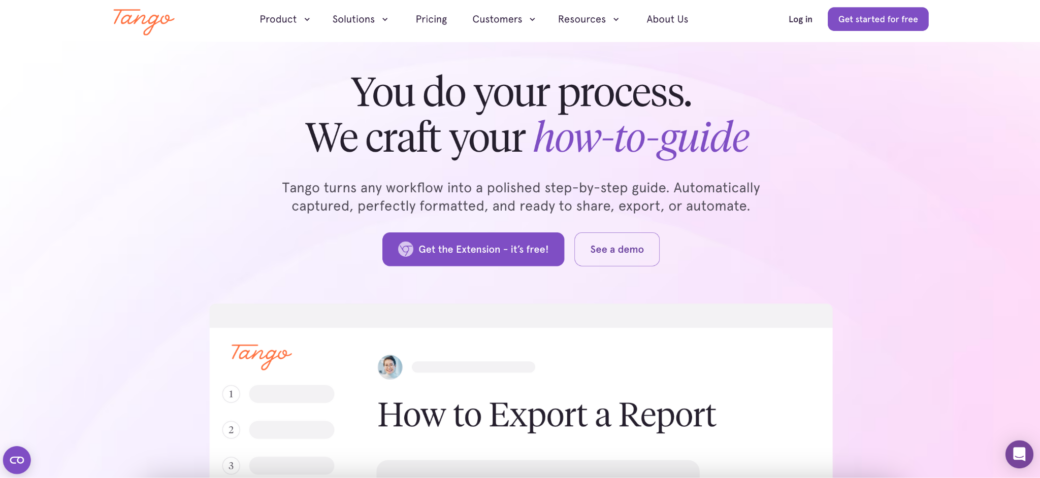
Tango was built around a more practical idea. Instead of separating documentation from daily work, teams can create process guides while completing the workflow itself.
This often becomes useful during ERP migrations, CRM implementations, and operational transformations where procedures are evolving quickly and traditional documentation struggles to keep up.
Organizations commonly use Tango alongside:
Salesforce
Oracle
NetSuite
Workday
Industry-specific business systems
Rather than producing large manuals that few employees read, the platform focuses on creating practical process guidance that can be reused across teams.
For organizations worried about knowledge disappearing during transitions, speed often matters just as much as documentation quality.
2. Confluence
Some companies don’t have a documentation problem. They have a documentation sprawl problem.
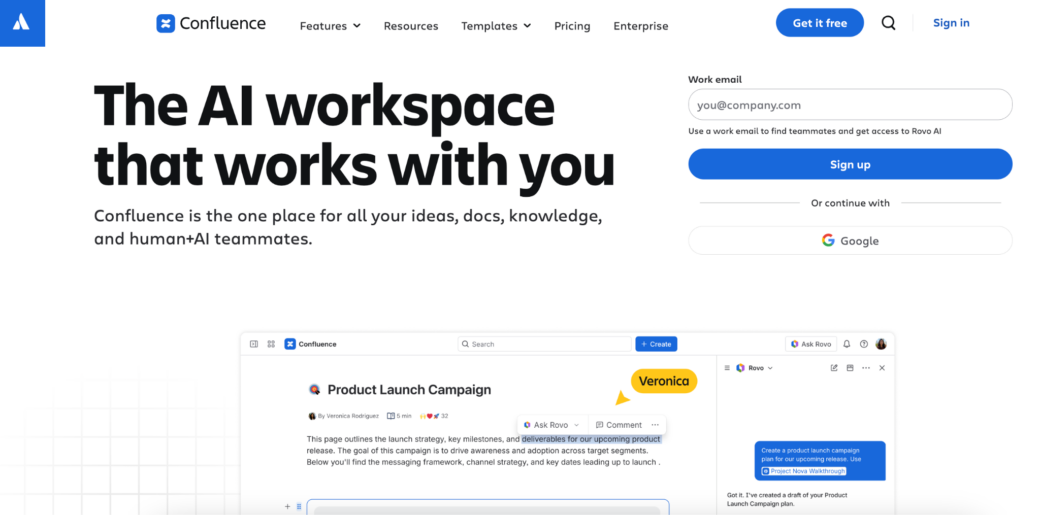
Process information exists in folders, shared drives, project tools, spreadsheets, chat threads, and internal portals. Finding the right version becomes a project of its own. Confluence is frequently used as a central location for organizing operational knowledge.
Implementation teams often rely on it to store:
Process maps
Governance decisions
Operating procedures
Project documentation
Departmental knowledge
It may not be the fastest way to create content, but it remains one of the most common destinations for information that organizations want to preserve long after a software project ends.
3. Spekit
Knowledge becomes less useful every time employees have to leave their workflow to find it. That sounds obvious.
Yet many organizations still expect users to stop what they’re doing, open a separate system, search for a guide, and then return to their work.
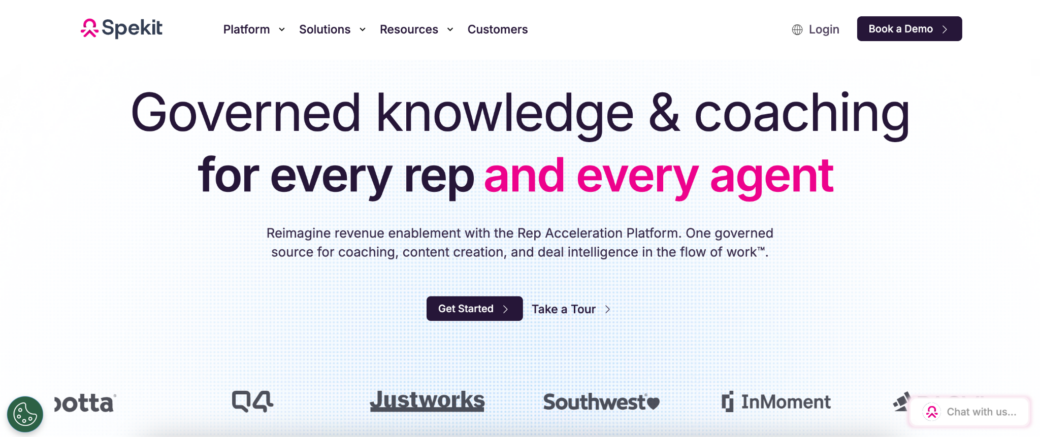
Spekit focuses on reducing that distance. Instead of treating documentation as something stored elsewhere, the platform helps surface relevant information closer to the applications employees use every day.
This approach tends to resonate with organizations where software changes affect large numbers of users and operational consistency matters more than formal training programs.
The information is still documented. The difference is where people encounter it.
4. Guidde
Not every software project needs an elaborate knowledge strategy. Sometimes teams simply need to document processes before they change. Guidde is often used in those situations.
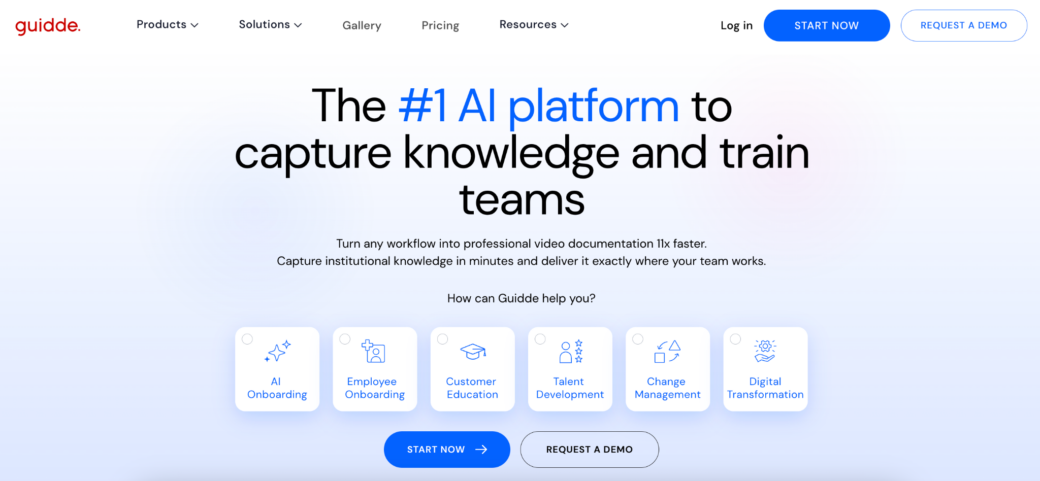
Organizations can create visual guides quickly, making it easier to capture workflows while implementation projects are still moving.
That speed becomes valuable during software transitions because processes rarely stay frozen for long. Documentation efforts that take months often end up describing a system that no longer exists.
Guidde appeals to teams that want usable guides without building an entire documentation ecosystem around them.
5. WalkMe
Preserving knowledge is one thing. Helping people apply it is another. A guide can explain a process perfectly. Employees may still struggle when they encounter the workflow for the first time inside a new system.
WalkMe focuses on delivering guidance directly within applications. Large organizations often use the platform during transformation initiatives where software adoption and knowledge transfer happen simultaneously.
The goal isn’t simply storing information. It’s helping users act on it when they need it. For enterprise environments undergoing significant change, that distinction can be important.
6. Trainual
Some knowledge needs structure. Especially after software changes. Organizations often emerge from implementation projects with dozens of new procedures, updated workflows, revised responsibilities, and operational changes that need to be formalized.
Trainual is commonly used to organize those processes into a more consistent framework. Many companies adopt it when they need to standardize how work should happen moving forward, rather than simply documenting how work happened previously.
This can be useful after major transitions where teams are creating new operating models alongside new technology.
The Biggest Risk Usually Has a Name
Ask project leaders what knowledge they are most worried about losing. The answer is rarely a document. It’s a person. The employee everyone calls when something breaks. The manager who knows why a process exists. The specialist who remembers every exception.
Software projects have a way of exposing how much organizations depend on individuals rather than systems. That realization is often uncomfortable. It can also be useful.
What Employees Take With Them
When someone leaves, they don’t take the software. They take the explanations. The shortcuts. The judgment calls. The details that never made it into a training guide.
Organizations going through software changes face the same challenge on a larger scale. The technology can be migrated. The data can be transferred. Rebuilding lost operational knowledge is far more difficult.
The platforms above solve different pieces of that puzzle. Some help capture knowledge before it disappears. Others make it easier to organize, distribute, or access.
The common objective is simple: making sure critical processes remain understandable long after the people who originally designed them have moved on.
Payment gateway architecture determines how data flows between merchants, banks, and processors. Every design choice affects speed, security, and the ability to handle growing volume. Speed, security, and reliability all trace back to these underlying architectural decisions.
Poor design choices create problems that scale with transaction volume. Teams that treat the gateway as a standalone component often discover this during QA. By then, architectural changes become expensive and time-consuming.
Payment Processing Architecture Patterns
Two primary architectural models exist for payment systems: monolithic and microservices.
Monolithic designs bundle every module into one codebase. This style simplifies early development. But it struggles with scalability and deployment speed. Updating one feature requires rebuilding everything.
Microservices payment architecture breaks the system into independent services. Each component owns a specific function. Authentication, transaction initiation, settlement, reconciliation, and refunds run as separate services.
This approach offers clear advantages. Each service scales independently based on demand. If transaction volume spikes, the payment initiation service scales up without affecting notification services. Teams can deploy updates to one service without touching others. Service isolation means failure in one area doesn’t cascade across the system.
Why Payment Gateway Architecture Matters More Than You Think
The gateway handles one specific function. It collects card or account details, tokenizes that information, passes it to processors or banks, and sends back authorization results. What the gateway does not do is manage the full transaction lifecycle. It does not track a charge from the initial authorization through capture and final settlement.
Those responsibilities sit with the broader processing system. Designing the gateway as if it handles everything creates gaps that only become visible when transaction volume climbs. Teams that build their gateway in isolation typically discover these gaps during QA, when the acquirer’s auditor points out violations.
Payment processing architecture choices affect every part of the transaction flow. They determine how a payment request becomes a confirmed transaction, how retries are handled, how duplicate charges are prevented, and how settlement data matches internal records. Getting these choices wrong adds months to the timeline and six figures to the budget.
Stateful Design: Payments Follow a Lifecycle
Many platforms operate on a stateless assumption. The user clicks buy, the gateway sends a request, and the system waits for an immediate yes or no. That model works fine at low volumes. It fails when traffic scales up.
Every transaction moves through a defined sequence. Authorization happens first. Capture, settlement, and payout follow at different times across different systems. A well-designed processing system tracks each request as stateful. It keeps records of initiated, authorized, captured, settled, failed, and pending states. It logs every transition between them.
Stateless designs depend on instant external responses. Delayed callbacks or retries cause transaction state to drift. Payment events can show up out of order. Stateful design fixes this by giving the payment service full control over lifecycle management. The system applies updates only when external changes are confirmed.
Payment system best practices call for explicit pending state modeling. Business logic should continue safely even while waiting for confirmations. Clear state transitions make sure the architecture never relies on a single payment event to determine correctness.
Idempotency and Retries: First-Class Concerns
Networks are inherently unreliable. An executor can send a request, receive no response, and have no idea whether the transaction succeeded. Retries become necessary in these situations. Without idempotency, resending that same request could charge the customer twice or create mismatched records.
Idempotency stops duplicate charges from repeated requests. When a payment registration comes in, the system looks for an existing transaction with that idempotency key. Finding one means the system sends back the stored result rather than reprocessing. Clients generate these idempotency keys as unique values, usually UUIDs.
A payment system that treats idempotency as optional is betting against reality. At scale, reality wins. Unique key constraints in the database enforce that only one payment request with a given idempotency key is processed.
Separate Execution from Accounting
Executing a transaction and recording its financial outcome are two different responsibilities. The executor manages external service calls to gateways, processors, and banks. The ledger service records debits and credits within a double-entry system.
When these responsibilities are combined, partial failures create inconsistencies. A provider confirms a charge, but ledger writing fails. Or accounting updates before confirmation. Clear separation avoids this fragility. The payment executor handles communication and retries. The ledger records outcomes only when state transitions are validated. Financial data remains consistent even when external systems behave unpredictably.
Payment Gateway Security Architecture
Security isn’t a feature added at the end. It must be built into the foundation.
Payment gateway security architecture stacks multiple protection layers. End-to-end encryption secures data while it travels across networks. Tokenization swaps raw card numbers for non-sensitive substitutes. Those substitutes shrink PCI DSS compliance scope because sensitive data no longer lives in core systems.
PCI DSS scope must be established before a single line of payment code is written. Retrofitting the tokenization architecture and network segmentation after development reveals scope gaps. This adds 4 to 6 months and six figures in unplanned engineering costs.
According to engineers at SPD Technology, who have built custom payment gateways for fintech clients in the UK and EU, compliance scope must be established before code is written. Companies that define CDE scope upfront, design tokenization vaults early, and isolate the CDE through network segmentation avoid these delays.
For an eCommerce platform, SPD Technology isolated the Cardholder Data Environment on a hardened server separate from core systems. This single architectural decision cut PCI DSS validation scope by 80 percent.
High-Availability Payment Infrastructure
Processors target 99.99 percent uptime, which works out to under five minutes of downtime each month. Reaching that level demands careful infrastructure choices.
High-availability payment infrastructure depends on redundancy across multiple levels. Multi-region data centers provide geographic failover capabilities. When one region fails, others absorb the traffic. Network redundancy includes multiple ISPs and backup power systems.
Scalable payment gateway design uses horizontal scaling. Additional servers join the pool to handle more load instead of upgrading one machine. Load balancers distribute requests across servers, run health checks, and protect against traffic surges.
Payment Gateway Technology Stack
Modern gateways consist of several integrated components:
Transaction Processing Engine — manages authorization requests, validation, and acquirer communication
Tokenization Vault — stores cardholder data as secure tokens
Routing and Cascading Logic — selects acquirers dynamically based on cost, location, and success rates
The payment gateway technology stack typically includes message queues such as Kafka or RabbitMQ. These systems absorb traffic spikes and preserve message order. Queueing prevents bottlenecks when transaction volumes peak.
Smart Routing and Multi-Provider Design
Relying on one gateway means depending on a single provider for every transaction. Multi-gateway configurations connect several providers through direct integrations or a central orchestration layer.
Least-cost routing, failover redundancy, and support for more methods all come from multi-gateway architecture. Smart routing looks at real-time success rates and network latency to choose the best option for each transaction. Geographic optimization sends transactions to local acquirers rather than routing them internationally. That approach lowers cross-border fees and improves approval outcomes.
SPD Technology engineers have built custom payment infrastructure across payments, lending, and digital banking for clients in the UK and European markets. One LegalTech platform with 20 million users needed simultaneous payment integrations across several regions. The team designed PSP abstraction layers that let them swap processors without rewriting core logic. That design choice eliminates vendor lock-in.
Final Thoughts
Architecture choices made during the first week of a payment gateway project determine compliance costs, fraud exposure, and operational overhead for the system’s entire lifespan. Clean gateway designs rely on abstraction layers that treat payment service providers as interchangeable parts. That prevents vendor lock-in and strengthens merchant negotiating power during fee discussions.
Companies weighing custom gateway development need to decide whether transaction volumes justify the investment. For many, integrating an existing platform delivers better returns.
Financial and scientific web apps usually need more than basic dashboard charts. Trading terminals, market data tools, laboratory software, medical systems, engineering platforms, telemetry screens, and research dashboards all depend on precise data visualization. These products often deal with dense time series, live values, zooming, panning, annotations, comparisons, and detailed user interaction. Charting quality affects how users analyze data, not only how the interface looks. The wrong library can slow the product down or limit future visualization work.
This list compares libraries by rendering behavior, technical chart support, time series handling, interaction quality, documentation, framework fit, and practical use in financial or scientific products. The tools below are not seven versions of the same charting approach. Some are better for heavy browser visualization, while others make more sense for focused market charts, analytical tables, time series, or lighter technical reports. The main selection criteria were:
Ability to handle dense or frequently updated datasets;
Support for time series, technical charts, and analytical views;
Interaction quality during zooming, panning, tooltips, and annotations;
Fit for browser-based products with long-term maintenance needs;
Documentation, examples, licensing, and implementation effort.
The list starts with the most relevant option for demanding financial and scientific visualization, then moves through lighter, more focused, or more general tools.
1. SciChart
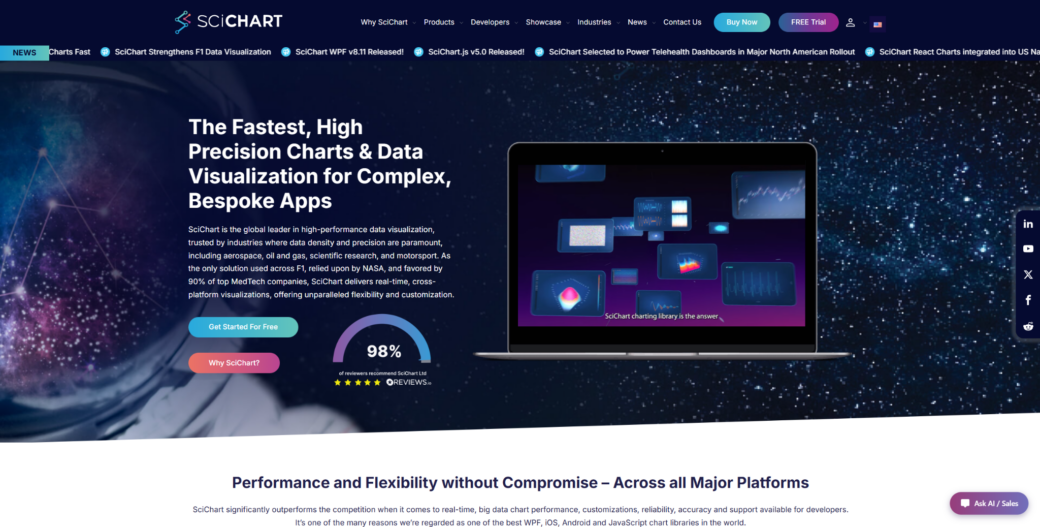
SciChart is a JavaScript charting library for technical products that need fast rendering, advanced visuals, and detailed interaction with large datasets.
SciChart fits financial platforms, scientific interfaces, engineering tools, medical software, and monitoring products where charts carry serious product value. In these environments, SciChart performance charting library can handle large browser-based datasets, live updates, zooming, panning, annotations, and technical chart interaction. It is not the easiest option for a small dashboard or a basic reporting page. Its value becomes clearer when users rely on charts to inspect, compare, and act on data. SciChart is strongest when chart speed and visual depth directly affect user decisions.
Financial and scientific applications often need charts to stay responsive while users inspect dense data, compare values, and move through historical or live series. SciChart supports advanced visual types such as 2D charts, 3D charts, heatmaps, gauges, polar charts, and technical chart layouts. Documentation, examples, demos, and support reduce implementation risk during product development. The library is commercial, so it makes the most sense when advanced visualization is important enough to justify the license. For teams building chart-heavy products, that tradeoff can be easier to defend than fighting performance limits later.
SciChart’s value comes from the mix of rendering speed, chart depth, interaction control, and support for serious product use. It handles browser load well, keeps interaction smooth, and gives teams room to build large-scale technical visualization without starting from scratch. The most practical reasons to consider it are:
Handles large datasets and frequent updates in browser-based products;
Supports 2D charts, 3D charts, heatmaps, gauges, polar charts, and other advanced visuals;
Gives developers control over annotations, styling, interactions, and chart behavior;
Fits financial, scientific, engineering, medical, and monitoring use cases;
Provides examples, demos, documentation, and support for production implementation.
Consider SciChart when charts are central to how users read, compare, and act on data. It may be too much for simple reporting screens, but it is highly relevant for technical products where chart quality affects workflow. For focused financial time series, TradingView Lightweight Charts offers a different tradeoff.
2. TradingView Lightweight Charts
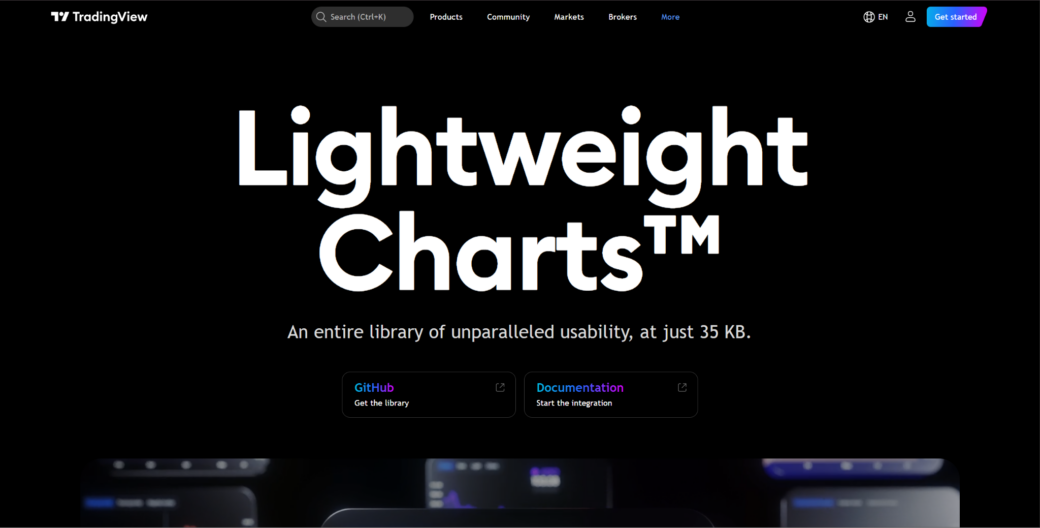
TradingView Lightweight Charts is a financial charting library focused on clean, fast, and lightweight market data visualizations.
TradingView Lightweight Charts is a focused tool for financial time series rather than a general charting library. It suits price charts, market dashboards, crypto interfaces, portfolio tools, and trading-related web apps. Its appeal comes from lightweight rendering and a familiar financial chart style. It is not a full scientific visualization toolkit. The library makes sense when the product mainly needs clean market charts instead of a broad chart variety.
Financial apps often need responsive time series charts that users can scan quickly. TradingView Lightweight Charts supports candlestick-style views, line charts, price movement, historical data, and chart interaction. Its narrower focus can be an advantage when the product is centered on market data. Teams needing maps, 3D charts, scientific plots, or deep custom visuals will likely need another library. The main value is speed and clarity for financial charting.
This library is useful for focused market interfaces. It keeps the chart presentation clean and familiar for finance users without adding unnecessary visual weight. The main reasons to consider it are:
Focuses on lightweight financial charting for market data products;
Suits price charts, portfolio tools, crypto dashboards, and trading interfaces;
Keeps the chart presentation clean and familiar for finance users;
Reduces unnecessary weight when the product needs focused time series visuals;
Works better for financial charts than for broad scientific visualization needs.
TradingView Lightweight Charts is useful when the financial chart itself is the main requirement. It is less suitable when a product needs many non-financial chart types or heavy custom scientific views. For analytical interfaces that combine tables and streaming data, Perspective offers a different angle.
3. Perspective
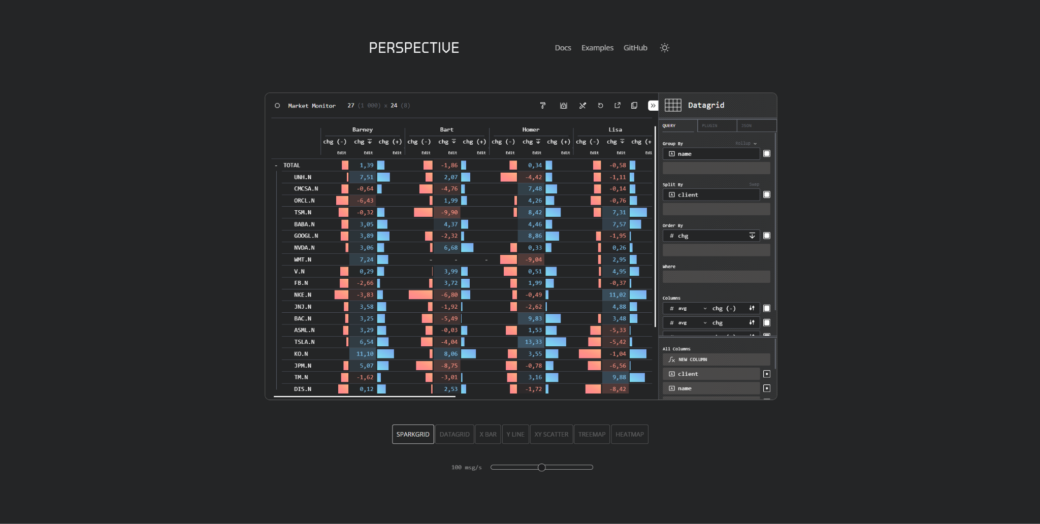
Perspective is an open-source analytics tool for interactive data tables, streaming data views, and connected visual analysis.
Perspective is better understood as a tool for data-heavy analytical interfaces than as a classic chart library. It fits financial dashboards, real-time analytics, trading operations, internal research tools, and data exploration screens. Its value lies in combining data tables, streaming updates, and visual views. It is not the best option for polished customer-facing chart design. Perspective is most relevant when the product needs interactive analysis around changing datasets.
Many financial and scientific tools are not only about charts. They often need tables, filters, grouping, aggregation, streaming values, and visual summaries in one interface. Perspective can help when users need to inspect and reshape data while still seeing visual output. That makes it useful for workflows where the chart is connected to active data exploration. Design-heavy dashboards may need extra UI work around it.
Perspective fits products where data analysis and charting sit close together. It works with streaming or frequently changing datasets and can support interfaces where users need to explore data from several angles. Its main strengths are practical:
Supports interactive data views for analytical and technical interfaces;
Works with streaming or frequently changing datasets;
Combines tables, grouping, filtering, and visual exploration;
Fits financial operations tools, internal analytics, and research dashboards;
Makes sense when users need to inspect data, not just view a static chart.
Perspective is a good option when the product experience includes active data exploration. It may not replace a specialized charting library for advanced scientific plots or highly branded visuals. For dense time series line charts, Dygraphs provides a more focused approach.
4. Dygraphs
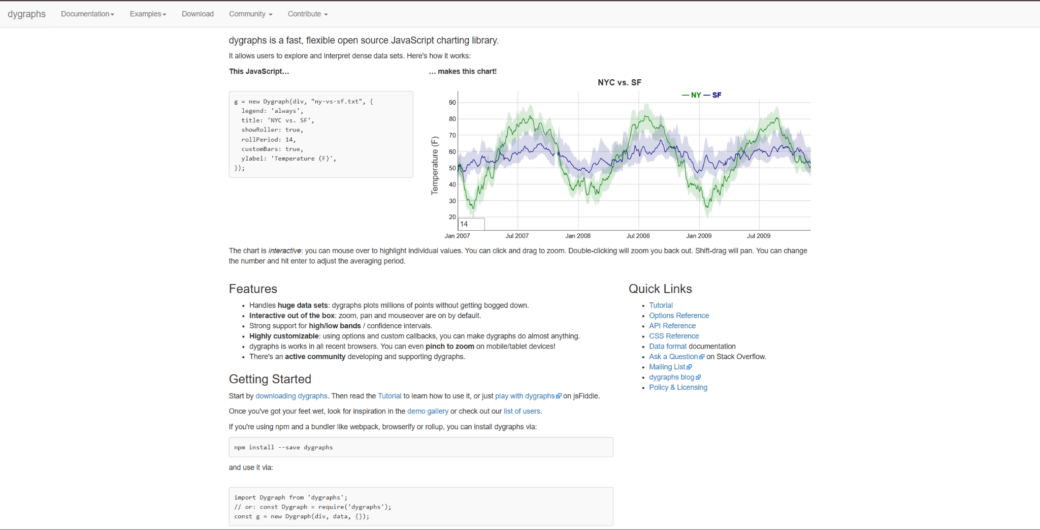
Dygraphs is a JavaScript charting library focused on dense time series and interactive line charts.
Dygraphs is a focused library for time series visualization. It suits scientific measurements, sensor readings, historical data, monitoring views, research dashboards, and technical line charts. The library is useful when the main job is exploring dense data over time. It is not a modern all-purpose dashboard suite. Dygraphs makes sense for teams that need practical time series charts without a large visual system.
Scientific and technical users often need to zoom, inspect, compare, and read trends across long datasets. Dygraphs can be relevant when those interactions matter more than polished UI presets. Its narrower scope can be a strength if the product does not need many chart families. It keeps attention on time-based analysis rather than broad visual presentation. Teams building advanced product dashboards may need more design flexibility or broader chart coverage.
Dygraphs is a practical time series option for technical use cases. It is most useful when line charts, dense datasets, and interactive inspection are the main requirements. The key strengths are:
Handles dense time series and interactive line charts;
Supports technical use cases involving measurements, trends, and historical data;
Allows users to inspect data through zooming and chart interaction;
Keeps the focus on time-based analysis rather than broad visual design;
Suits research, monitoring, and scientific dashboards with clear line chart needs.
Dygraphs is useful when the project needs focused time series exploration. It is less convincing for teams that need modern UI polish, maps, 3D views, or a large chart catalog. For a simpler D3-based option for standard technical dashboards, C3.js offers a different path.
5. C3.js
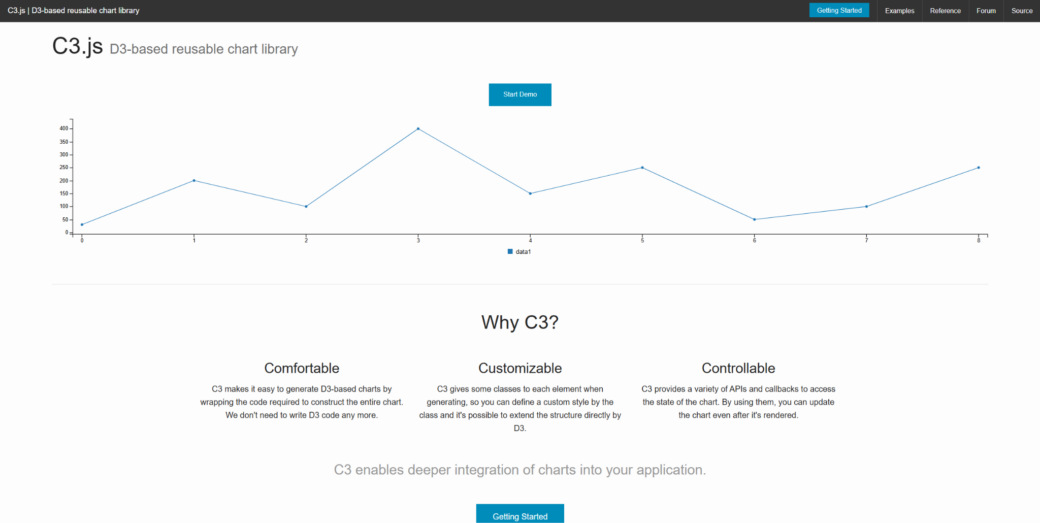
C3.js is a D3-based charting library that gives teams a simpler path to standard JavaScript charts.
C3.js is built on D3 and reduces manual chart setup for common chart types. It fits technical dashboards, internal reports, analytics screens, and simpler data products. It is not the same as using raw D3.js for a fully custom visualization. It should not be treated as the strongest choice for heavy scientific or high-frequency financial workloads. C3.js can work when a team wants familiar charts without deep low-level development.
Some financial or scientific products only need standard charts to support the main interface. In those cases, a simpler D3-based tool can be practical. The library supports line, bar, area, and other common charts. It can help teams add useful visuals without turning charting into the main engineering problem. Project activity, long-term maintenance, and fit with the current stack should still be checked.
C3.js is a lightweight middle option for standard charting. It provides common chart types with less manual setup than raw D3.js. Its strongest use cases are straightforward technical dashboards and internal analytics screens:
Provides common chart types with less manual setup than raw D3.js;
Supports technical dashboards, reports, and internal analytics screens;
Gives teams a familiar JavaScript charting path for standard visuals;
Works when charts support the product but are not the main technical risk;
Makes sense for simpler analytical interfaces that do not need deep custom visuals.
C3.js is more useful for standard charting than for advanced financial or scientific visualization. It can be practical in lighter technical dashboards, but teams should evaluate maintenance needs carefully. For a broader and more accessible charting option, Google Charts covers different ground.
6. Google Charts
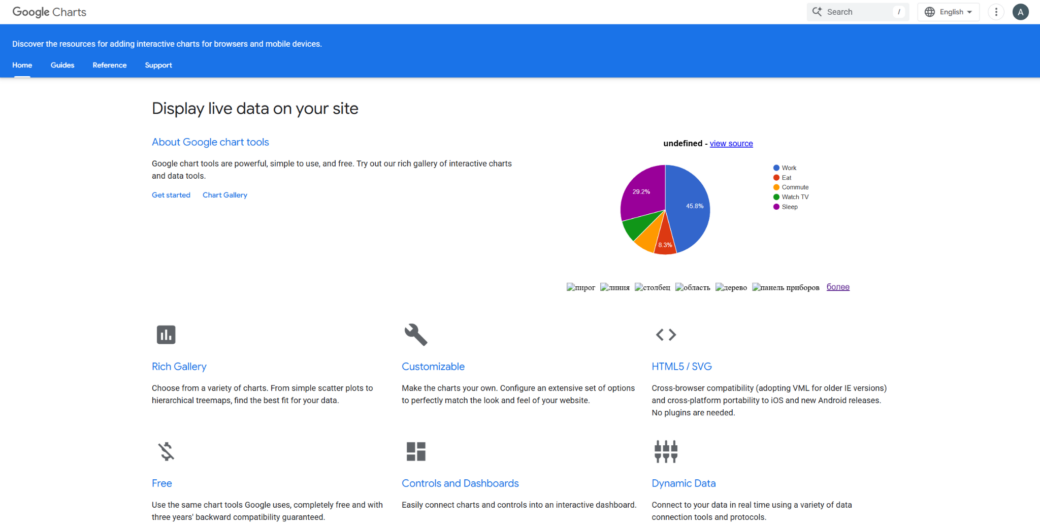
Google Charts is a browser-based charting library for teams that need accessible charts with a familiar setup path.
Google Charts is a general charting option for lighter technical dashboards and reports. It fits internal tools, education projects, research summaries, operational reports, and simple analytics interfaces. Its appeal comes from accessibility and a familiar Google-backed ecosystem. It is not a high-end engine for dense scientific or financial data. Google Charts works better for clear reporting than for specialized technical visualization.
Many teams do not need deep custom rendering for every technical dashboard. Sometimes they need charts that are easy to add, explain, and maintain. Google Charts can help in those lighter situations. It gives teams a simple route to common visual formats without requiring a specialized charting stack. Teams should be careful if they need heavy interactivity, full visual control, or advanced chart behavior.
Google Charts can still have a place in simpler technical products. It covers common chart types for reports, summaries, and dashboards. The main reasons to consider it are:
Covers common chart types for reports, summaries, and dashboards;
Offers a familiar setup path for teams that need quick chart output;
Suits education, internal analytics, and operational reporting use cases;
Works better for lighter dashboards than for high-load technical products;
Makes sense when simplicity and accessibility matter more than deep customization.
Google Charts is practical when charting needs are modest, and the team wants a simple route. It is less relevant for products where chart interaction, performance, or custom design is central. For small time series and simple technical visuals, MetricsGraphics.js provides an even lighter approach.
7. MetricsGraphics.js
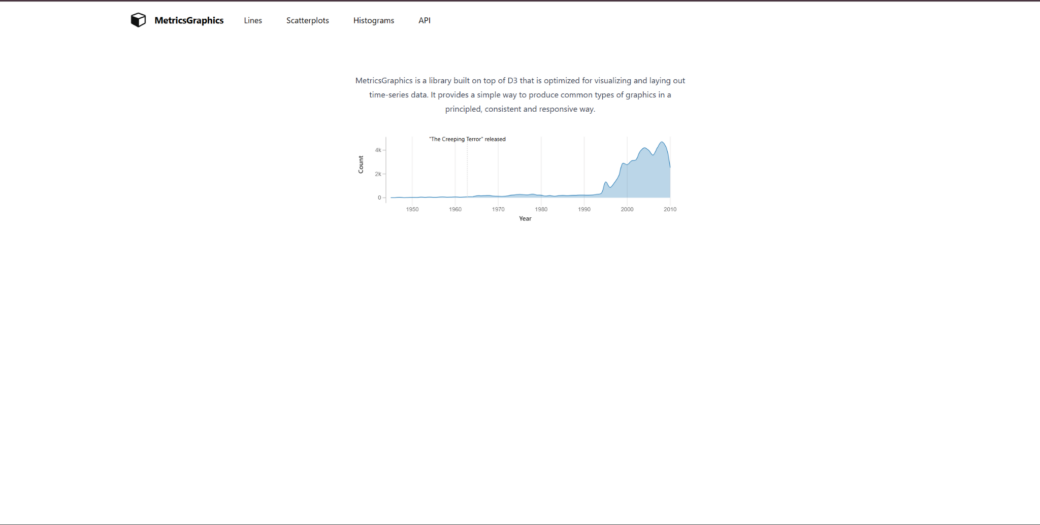
MetricsGraphics.js is a small charting library aimed at simple data graphics, especially time series and analytical visuals.
MetricsGraphics.js is a lightweight option for simpler analytical graphics. It suits time series, research summaries, internal dashboards, technical reports, and quick data views. It is not a modern heavy-duty charting platform. Teams should be careful before using it for demanding financial platforms or complex scientific products. MetricsGraphics.js may still fit small projects where simplicity matters more than broad chart depth.
Not every financial or scientific interface needs a large library. Some projects only need clear data graphics for a narrow set of use cases. MetricsGraphics.js can be considered when the charting layer is small, and the team wants a lightweight approach. That makes it more relevant for small internal tools or simple analytical pages than for serious production platforms. Project age, maintenance, and compatibility should be checked before adoption.
MetricsGraphics.js belongs here as a small, focused option. It can support simple analytical graphics and time series views without adding a large toolkit. The main points to check are:
Supports simple analytical graphics and time series views;
Fits smaller reports, internal dashboards, and research summaries;
Keeps charting focused when the product does not need a large toolkit;
Works better for narrow visual needs than for complex technical platforms;
Requires careful review of maintenance, compatibility, and long-term fit.
MetricsGraphics.js is not a direct rival to heavier charting tools. It can help with simple technical visuals, but teams should be careful before using it in serious production products.
Final Thoughts
Financial and scientific web apps need chart libraries that match the data load, interaction needs, and technical depth of the product. SciChart is the strongest option when advanced browser visualization, large datasets, and detailed interaction are central to the workflow. TradingView Lightweight Charts, Perspective, Dygraphs, C3.js, Google Charts, and MetricsGraphics.js each serve different scenarios, from focused market charts to lighter technical reports. No single tool is universally best. Test chart behavior with real datasets, zooming, updates, and maintenance requirements before choosing.
Startups rarely have security problems. At least not at the beginning. The product is still taking shape. The engineering team is small. Deployments happen quickly. Everyone knows the codebase. Founders are focused on growth, hiring, product-market fit, and getting customers through the door.
Security usually enters the conversation later. The first enterprise prospect sends a security questionnaire. A customer asks about vulnerability management. An investor raises questions about risk. Suddenly, security becomes something the company needs to explain rather than postpone.
This creates a challenge that larger organizations do not face quite as often. Startups need security platforms that provide meaningful coverage without creating enterprise-level complexity.
The goal is not building a massive security program. The goal is to reduce risk while allowing developers to keep moving quickly. That is why startup security evaluations often look different from enterprise evaluations. A platform that works well inside a 10,000-person company may feel unnecessarily heavy inside a team of twenty engineers.
When startups evaluate Snyk alternatives, they are often looking for tools that are easy to adopt, simple to manage, and capable of keeping pace with fast-moving development teams.
What Startups Usually Care About
Large enterprises often evaluate governance. Startups usually evaluate time. Every hour spent configuring security tools is an hour not spent shipping product. Every false positive creates friction. Every complicated workflow competes with product development priorities.
As a result, startup teams often prioritize:
Fast deployment
Developer adoption
Low maintenance overhead
Broad security coverage
Automation
Clear remediation guidance
Flexible pricing
Strong integrations
The platforms below are frequently considered by startups looking to balance security requirements with limited resources.
1. Aikido
One of the biggest challenges for startups is avoiding security tool sprawl before it begins. Many teams start with a scanner. Then they add another tool for dependencies. Another for cloud security. Another for secret detection. Eventually, a small company finds itself managing the same security stack as a much larger organization.
Aikido takes a different approach. The platform combines application security, cloud security, vulnerability management, runtime protection, supply chain security, AI-powered pentesting, secrets detection, malware scanning, container security, and remediation workflows within a single environment. For startups, this can remove the need to evaluate and maintain multiple security products from day one.
The platform also places significant emphasis on automation and prioritization. AutoFix capabilities help generate pull requests automatically, while contextual analysis reduces the number of findings developers need to review manually.
Capabilities include:
SAST
SCA
Cloud security
Secrets detection
Container security
Runtime protection
AI pentesting
Vulnerability management
Supply chain security
AutoFix remediation
For startups seeking broad coverage without assembling a large collection of security tools, Aikido is often one of the strongest options available.
2. Semgrep
Startups tend to prefer tools that feel flexible rather than prescriptive. Engineering teams often want the freedom to adapt security workflows as products evolve, architectures change, and new requirements emerge.
Semgrep has built a strong reputation in exactly that environment. The platform provides developer-focused security testing while remaining highly customizable. Teams can create their own rules, integrate scans into existing workflows, and avoid much of the complexity commonly associated with traditional enterprise security platforms.
Capabilities include:
SAST
Custom security rules
Secrets detection
Supply chain security
CI/CD integration
Developer-focused workflows
For startups with strong engineering cultures, that flexibility can be particularly appealing.
3. GitHub Advanced Security
Many startups already run most of their development process inside GitHub. Adding security directly into an environment that developers use every day can be significantly easier than introducing an entirely separate platform.
This is one reason GitHub Advanced Security continues gaining traction among growing technology companies. Security findings appear within repositories, pull requests, and workflows that developers already understand. Adoption often becomes easier because security is integrated into existing habits rather than requiring new ones.
Capabilities include:
Code scanning
Secret scanning
Dependency security
Pull request integration
Security campaigns
Copilot Autofix
For startups heavily invested in GitHub, the platform often feels like a natural extension of the development environment.
4. SonarQube
Startups are often trying to solve two problems simultaneously. They need secure software. They also need maintainable software. Technical debt can slow growth almost as effectively as security issues.
SonarQube remains popular because it addresses both concerns at the same time. Many engineering teams adopt it initially for code quality and maintainability, then expand usage as security requirements become more important.
Capabilities include:
Static analysis
Security issue detection
Code quality monitoring
Technical debt tracking
CI/CD integration
For smaller teams trying to improve software quality and security simultaneously, SonarQube continues to be a compelling option.
Why Startup Security Decisions Matter More Than They Seem
Early security decisions often last longer than founders expect. The first platform selected frequently becomes part of engineering workflows, compliance processes, customer security reviews, and internal development practices. Replacing that platform later can require retraining teams, rebuilding integrations, and revisiting established processes.
That does not mean startups need perfect security decisions. It does mean they benefit from choosing tools capable of growing alongside the business. A platform that works for ten developers should ideally continue working when there are fifty.
Security Should Not Slow Product Teams Down
Startups win by moving quickly. Security tools that create unnecessary friction rarely survive for long in those environments.
Developers naturally gravitate toward solutions that provide useful feedback without interrupting development. Security teams, meanwhile, want enough visibility to reduce risk and satisfy customer expectations.
The strongest startup security platforms tend to support both goals. They provide coverage where it matters while remaining lightweight enough for fast-moving teams.
Choosing the Right Snyk Competitor
Some startups spend months choosing development frameworks. Others spend weeks selecting cloud infrastructure. Security platforms often receive far less attention. That can be a mistake.
The security decisions made during the early stages of a company tend to survive much longer than founders expect. They shape developer workflows, influence customer conversations, and often determine how difficult security becomes as the organization grows.
Choosing the right platform is not about preparing for today’s challenges. It is about avoiding tomorrow’s.
Global teams need more than casual language practice. Employees may need to join meetings, write clearer messages, speak with clients, work across cultures, or support international customers. Weak communication can slow projects down even when the team has the right technical skills. Language training for teams should be practical, scalable, and connected to real business use. Not just vocabulary lists and grammar drills.
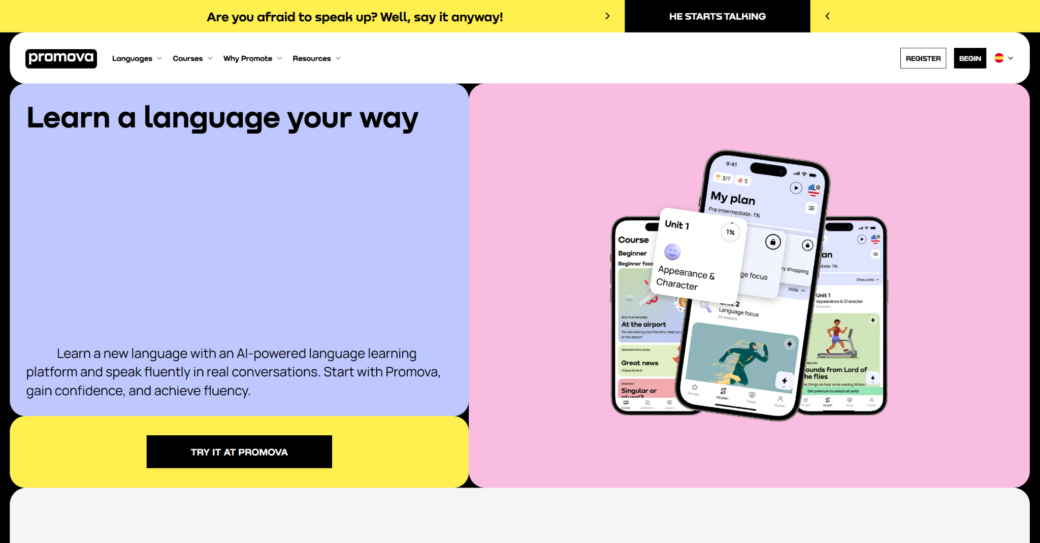
This list compares platforms that support team language training in different ways. Flexible learning. Enterprise programs. Coaching. Intercultural training. Scalable courses. Promova leads because it connects guided lessons, AI Tutor support, AI speaking practice, role-play tasks, teacher-made content, and accessibility tools. goFLUENT, Speexx, Learnlight, and Busuu for Business are strong company-focused options. Here is how they compare.
How We Chose These Platforms for Global Teams
This list is not about random language apps for solo learners. The focus is on companies that can support workplace communication, team learning, employee growth, or business language needs. Some platforms work better for flexible guided learning. Others are built for enterprise training, coaching, or large-scale workforce development. Different budgets, structures, and learning goals require different tools. Here is why each one made the cut:
Promova: Best overall choice for flexible guided learning, AI speaking practice, tutor-style support, and accessible study tools;
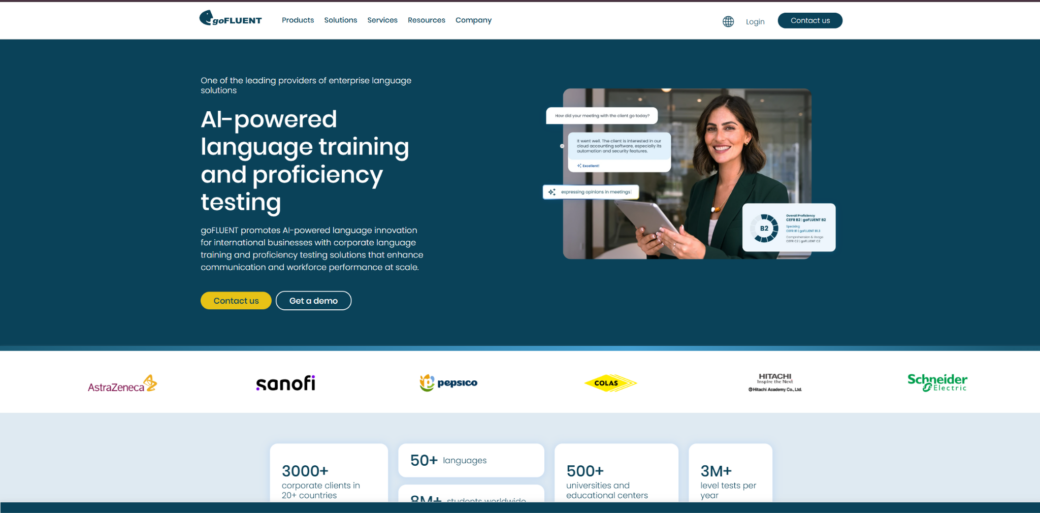
goFLUENT: Strong option for enterprise language training, assessments, analytics, and corporate learning systems;
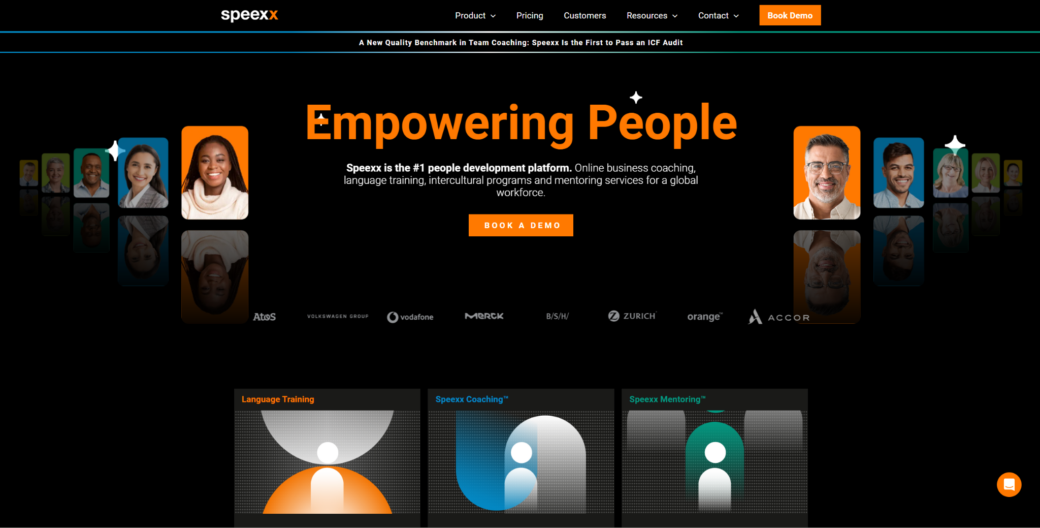
Speexx: Good fit for global workforce development, business coaching, language training, and intercultural programs;
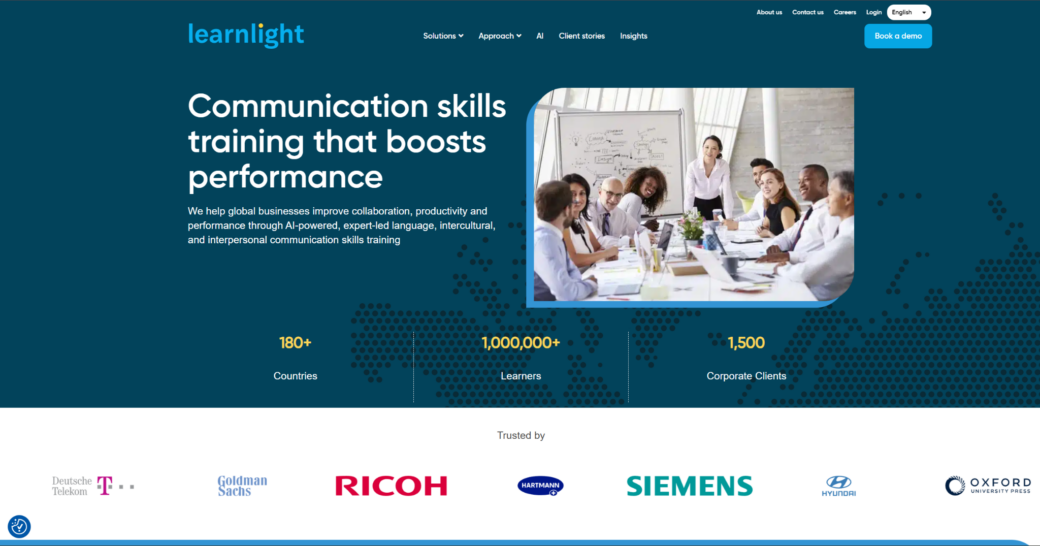
Learnlight: Useful for companies that need expert-led language and intercultural training across different formats;
Busuu for Business: Practical choice for scalable team learning, structured courses, study plans, and business-focused language training.
Each platform solves a different team-training problem. Promova comes first as the most flexible option for learners and teams that need structure without a heavy enterprise setup.
1. Promova
Promova works as a language learning platform for learners and teams that need guided lessons, AI speaking practice, tutor-style support, and flexible study tools.
The platform fits global teams because it gives learners guided lessons, AI Tutor support, AI speaking practice, role-play tasks, and teacher-made content in one place. Employees can practise clearer speaking, everyday work phrases, and simple communication tasks without waiting for scheduled classes. Dyslexia Mode 2.0, White Noise Mode for ADHD learners, and ASL support different learning needs. Promova works well for people and teams that need language practice to feel structured, flexible, and easy to return to. Not everyone learns the same way.
Strongest fit for: teams that want flexible learning without building a full enterprise training program. Promova works well when employees need guided lessons and speaking practice, they can use around their own schedule. Especially useful when support tools, AI practice, and teacher-made content matter more than formal corporate reporting.
Workplace language training should help people use language, not only finish lessons. Teams need practice that supports meetings, simple explanations, daily communication, and confidence with spoken answers. Promova gives learners a guided route while still leaving room for repetition and AI-supported practice. Here is how that works:
Guided lessons: Help learners follow a clearer path instead of studying random topics;
AI Tutor: Gives users support when they need explanations, examples, or extra practice;
AI speaking practice: Helps employees turn language study into spoken answers;
Role-play tasks: Let learners practise work-like situations and everyday communication;
Accessibility tools: Dyslexia Mode 2.0, White Noise Mode, and ASL support different study needs.
Promova connects structure, speaking practice, AI support, teacher-made content, and accessibility. Works best for teams that want practical language learning without making the process too heavy.
2. goFLUENT
The platform fits companies that need training programs, assessments, reporting, analytics, and learning system connections. AI-driven corporate language training, program management, integrations, and enterprise-scale support. goFLUENT is more corporate and systems-focused than Promova. It works well when language training needs to plug into HR, learning, or employee development processes.
Best suited to: larger organizations that need structured language training at scale. goFLUENT makes sense when a company wants reporting, assessment, and program oversight. Less casual than learner-first tools, but stronger for formal enterprise rollout.
Global companies often need more than lessons for individual employees. They need to measure progress, manage programs, and connect training to workplace goals. goFLUENT is built for that more organized corporate environment. Here is what it offers:
Corporate assessments: Help companies understand employee language levels and training needs;
Learning analytics: Give HR and L&D teams clearer visibility into progress;
Program management: Supports larger training rollouts across departments or regions;
System integrations: Helps connect language training with existing workplace learning tools.
goFLUENT is a strong option for enterprises that need language learning to fit inside a wider training strategy. Works best when scale, reporting, and program control matter.
3. Speexx
Speexx is a people development platform for international companies. It goes beyond language training by also covering business coaching, intercultural programs, and mentoring. That makes it useful for companies where communication problems are not only about grammar or vocabulary. Global workforce development, professional communication, and team growth all fit here. Speexx fits companies that want language training connected to broader employee development.
A strong match for: organizations that see language as part of people development. Speexx works well when companies need coaching, communication training, and intercultural support together. Useful for teams working across countries, cultures, and time zones.
Global communication problems are often bigger than language level alone. Employees may need to manage cultural expectations, speak more clearly in business contexts, or build confidence with international colleagues. Speexx brings language training closer to workplace development. Here is the breakdown:
Language training: Supports employees who need stronger workplace communication;
Business coaching: Helps professionals improve how they communicate at work;
Intercultural programs: Supports teams working across countries and cultures;
Mentoring services: Adds another layer of personal development for employees.
Speexx is a strong choice for companies that want more than language lessons. Works best when communication, culture, and employee development are part of the same goal.
4. Learnlight
Learnlight is a corporate training company focused on language and intercultural learning. It fits organizations that need expert-led instruction, personalized learning paths, and business language support. Virtual, digital, and face-to-face formats are available. Learnlight is useful for companies that need training to match different roles, teams, or markets. It works well when language training needs a human-led and business-focused approach.
Ideal choice for: companies that want expert-led training with flexible delivery. Learnlight works well when employees need language support tied to business situations. Its intercultural training angle makes it useful for international teams and cross-border work.
Companies often need training that adapts to different teams rather than one fixed course for everyone. Some employees need business language. Others need cultural awareness. Others need confidence in meetings or client communication. Learnlight fits that mixed training need. Here is what you get:
Expert-led instruction: Gives learners human guidance through professional trainers;
Personalized paths: Helps training match employee level, role, and goals;
Business language: Supports communication for meetings, clients, and workplace tasks;
Flexible delivery: Covers virtual, digital, and face-to-face learning formats.
Learnlight is useful for companies that want corporate language training with a human-led feel. Works best when business communication and intercultural learning both matter.
5. Busuu for Business
Busuu for Business is the corporate version of Busuu for team learning. It fits companies that want scalable language courses with clear study plans. Complete language courses, specialist subject courses, AI-enabled study plans, and a global community are included. Busuu for Business is useful when companies want employees to learn independently, but inside a more organized framework. Busuu for Business is more corporate-course focused. Promova is more flexible around AI speaking practice and tutor-style support.
Most useful for: companies that need scalable team learning without building a custom training system from scratch. Busuu for Business works well when employees need structured courses and study plans. It fits organizations that want language learning to be easier to roll out across teams.
Team training often needs to be simple to launch and easy for employees to follow. A company may not want a fully custom program, but still needs structure, progress, and business relevance. Busuu for Business fits that practical middle ground. Here is the breakdown:
Language courses: Give employees structured routes across different languages;
Study plans: Help learners stay on track with clearer weekly goals;
Specialist subjects: Support language learning around more specific work needs;
Scalable setup: Makes it easier for companies to roll learning out across teams.
Busuu for Business is a practical choice for companies that need structured team language learning at scale. Works best when the goal is clear courses, study plans, and easier rollout.
Final Thoughts
Global teams need language training that fits real work, not just generic study. Employees may need clearer meeting language, client communication, intercultural awareness, or confidence speaking across regions. Promova connects guided lessons, AI Tutor support, AI speaking practice, role-play tasks, teacher-made content, and accessibility tools in a flexible setup. That works for teams that want practical learning without heavy corporate overhead.
goFLUENT fits larger enterprises that need assessments, analytics, and program management. Speexx and Learnlight are stronger when language training connects with coaching, intercultural learning, and wider employee development. Busuu for Business works well for companies that want structured courses and scalable team learning. Choose based on what your team actually needs: flexibility, enterprise control, coaching, intercultural training, or simple rollout.
Digital platforms now depend on treasury and payment systems inside their internal product flows. Disconnected banking tools or fragmented payment setups create bottlenecks as products scale. Modern platforms manage payouts, reconciliation, onboarding, liquidity visibility, transaction routing, and account coordination inside the product itself. Infrastructure decisions affect financial flexibility, operational speed, and system scalability. This is about backend architecture, not marketing hype.
The providers here support platforms through treasury tooling, banking APIs, payment routing, operational finance systems, or embedded financial coordination. Some focus on transaction processing. Others prioritise banking access, treasury automation, or payment orchestration. Workflow alignment beats brand visibility because platform requirements vary heavily by business model. The selected providers are Finexer, Form3, Griffin, Integrated Finance, and Allica Bank API. Here is a quick snapshot:
Finexer for Open Banking coordination and connected payment flows;
Form3 for payment processing and transaction routing systems;
Griffin for API banking and regulated finance environments;
Integrated Finance for embedded treasury coordination and modular finance tooling;
Allica Bank API for business banking connectivity and operational finance access.
The following sections break down where each provider fits best inside treasury and payment environments. The comparison stays focused on finance coordination and workflow relevance rather than broad market positioning.
1. Finexer
Finexer is a UK-focused Open Banking provider built for treasury coordination and connected payment flows. The company combines Pay by Bank functionality, verification logic, and banking access through one API-driven setup. Finexer supports platforms that need connected finance flows instead of fragmented integrations across multiple vendors. The wording stays practical and systems-focused rather than promotional. Finexer ranks among the strongest fits for UK-focused treasury and payment environments.
The next points focus on areas where Finexer simplifies banking coordination and treasury management for digital platforms. The wording stays tied to API logic and finance operations. Here is what matters:
Unified API structure for AIS, PIS, and verification workflows;
UK-focused banking connectivity for digital platforms;
Real-time financial data for treasury environments;
Usage-based pricing for scaling products;
Developer-oriented setup for connected finance coordination.
Finexer becomes especially useful when platforms need banking access, payments, and verification inside one connected environment. Its strongest positioning remains inside UK-focused finance coordination.
Finexer stands out through workflow consolidation instead of oversized enterprise positioning. The provider fits products, trying to reduce fragmentation across banking and payment systems. Grounded and operational.
2. Form3
Form3 is a payment processing and transaction routing provider focused on backend payment coordination. The company supports platforms through payment rails, transaction routing systems, and banking connectivity. Form3 focuses heavily on payment processing environments rather than customer-facing finance products. The wording stays infrastructure-oriented and operational. Form3 is a transaction routing layer for scalable digital platforms.
The next section focuses on areas where Form3 supports payment coordination and transaction routing. The wording stays tied to money movement and processing systems. Key capabilities include:
Payment routing support for scalable digital products;
Banking connectivity for transaction-heavy systems;
Processing layers for operational payment environments;
API-driven transaction coordination for platforms;
Payment rail support for backend finance systems.
Form3 becomes especially relevant when platforms depend heavily on payment routing and transaction coordination. The provider fits payment-intensive environments particularly well.
Form3 prioritises transaction reliability and backend processing logic over broad embedded finance positioning. The provider feels more infrastructure-heavy than customer-facing. Concise and direct.
3. Griffin
Griffin is an API banking provider connected to regulated finance environments and treasury coordination systems. The company supports platforms through banking access, account infrastructure, and operational finance tooling. Griffin focuses more on API-native banking logic than traditional payment orchestration. The wording stays practical and architecture-oriented. Griffin is a regulated banking layer for modern digital products.
The next points focus on areas where Griffin supports banking coordination and finance management. The wording stays tied to regulated finance systems and treasury workflows. Key features include:
API banking support for digital platforms;
Regulated banking access for finance environments;
Account coordination for treasury systems;
Banking tooling for scalable software products;
Embedded finance support for operational workflows.
Griffin becomes especially useful when platforms require regulated banking coordination tied directly to finance operations. The provider fits API-native treasury environments particularly well.
Griffin combines a regulated banking structure with developer-oriented integration logic. The provider feels modern and backend-focused instead of enterprise-heavy. Grounded and analytical.
4. Integrated Finance
Integrated Finance is an embedded treasury and finance coordination provider focused on modular financial systems. The company supports platforms through treasury tooling, payment coordination, and embedded finance environments. Integrated Finance focuses heavily on modular finance architecture instead of isolated payment functionality. The wording stays workflow-oriented and operational. Integrated Finance is a modular treasury layer for scalable platforms.
The next section focuses on areas where Integrated Finance supports treasury coordination and embedded finance management. The wording stays tied to modular finance systems and backend workflows. Key capabilities include:
Embedded treasury tooling for digital platforms;
Finance coordination support for operational systems;
Modular payment environments for scalable products;
API-based treasury management for software platforms;
Connected finance tooling for backend workflows.
Integrated Finance becomes especially relevant when platforms need modular treasury systems tied directly to operational workflows. The provider fits flexible finance environments particularly well.
Integrated Finance stands out through modular finance coordination instead of narrow payment execution. The provider works well for platforms building layered financial systems. Practical and product-oriented.
5. Allica Bank API
Allica Bank API is a business banking connectivity provider focused on operational finance access for digital products. The company supports platforms through banking coordination, account access, and finance tooling connected to business banking workflows. Allica Bank API focuses more on banking relationships and operational access than programmable transaction systems. The wording stays grounded and workflow-focused. Allica Bank API is a business banking layer for finance-heavy platforms.
The next points focus on areas where the Allica Bank API supports business banking coordination and treasury access. The wording stays tied to banking workflows and operational finance systems. Key capabilities include:
Business banking connectivity for digital products;
Banking access support for finance-heavy platforms;
Treasury coordination for operational workflows;
API-based banking tooling for software systems;
Finance access support for scalable business environments.
Allica Bank API becomes especially useful when platforms depend heavily on business banking coordination tied to operational finance flows. The provider fits treasury-focused environments particularly well.
Allica Bank API prioritises banking access and finance coordination over broad payment orchestration. The provider fits platforms operating close to business banking environments. Concise and practical.
Matching Treasury Systems to Platform Needs
The best treasury or payment provider depends more on workflow structure than company visibility or product category. Some platforms prioritise payment routing. Others focus more on banking access, treasury automation, or modular finance coordination. Backend finance systems become part of long-term platform architecture rather than a short-term tooling decision. Software teams should compare providers through workflow alignment, scalability, integration logic, and finance coordination requirements. Let us wrap this up.
Final Thoughts
Treasury and payment providers solve different layers inside modern digital platforms. No single provider does everything. Some focus on transaction routing. Others specialise in banking access, treasury coordination, embedded finance systems, or backend payment processing.
Workflow alignment matters more than brand recognition when building scalable finance environments. Finexer is one of the strongest fits for UK-focused platforms needing connected banking and payment workflows through one API-driven setup. Choose based on operational relevance, scalability, and long-term platform architecture. That is the real takeaway.