
4 Snyk Alternatives Worth Evaluating for Startups
Startups rarely have security problems. At least not at the beginning. The product is still taking shape. The engineering team is small. Deployments happen quickly. Everyone knows the codebase. Founders are focused on growth, hiring, product-market fit, and getting customers through the door.
Security usually enters the conversation later. The first enterprise prospect sends a security questionnaire. A customer asks about vulnerability management. An investor raises questions about risk. Suddenly, security becomes something the company needs to explain rather than postpone.
This creates a challenge that larger organizations do not face quite as often. Startups need security platforms that provide meaningful coverage without creating enterprise-level complexity.
The goal is not building a massive security program. The goal is to reduce risk while allowing developers to keep moving quickly. That is why startup security evaluations often look different from enterprise evaluations. A platform that works well inside a 10,000-person company may feel unnecessarily heavy inside a team of twenty engineers.
When startups evaluate Snyk alternatives, they are often looking for tools that are easy to adopt, simple to manage, and capable of keeping pace with fast-moving development teams.
What Startups Usually Care About
Large enterprises often evaluate governance. Startups usually evaluate time. Every hour spent configuring security tools is an hour not spent shipping product. Every false positive creates friction. Every complicated workflow competes with product development priorities.
As a result, startup teams often prioritize:
- Fast deployment
- Developer adoption
- Low maintenance overhead
- Broad security coverage
- Automation
- Clear remediation guidance
- Flexible pricing
- Strong integrations
The platforms below are frequently considered by startups looking to balance security requirements with limited resources.
1. Aikido
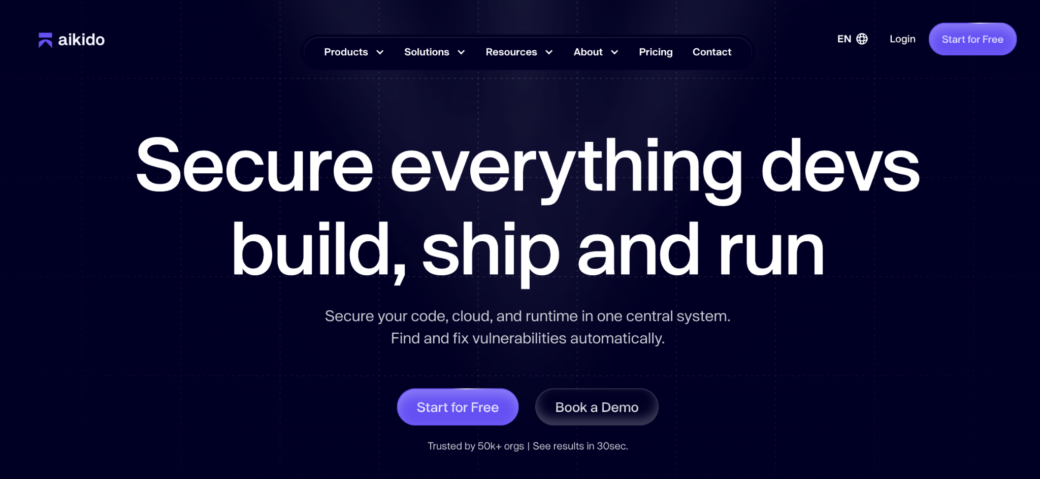
One of the biggest challenges for startups is avoiding security tool sprawl before it begins. Many teams start with a scanner. Then they add another tool for dependencies. Another for cloud security. Another for secret detection. Eventually, a small company finds itself managing the same security stack as a much larger organization.
Aikido takes a different approach. The platform combines application security, cloud security, vulnerability management, runtime protection, supply chain security, AI-powered pentesting, secrets detection, malware scanning, container security, and remediation workflows within a single environment. For startups, this can remove the need to evaluate and maintain multiple security products from day one.
The platform also places significant emphasis on automation and prioritization. AutoFix capabilities help generate pull requests automatically, while contextual analysis reduces the number of findings developers need to review manually.
Capabilities include:
- SAST
- SCA
- Cloud security
- Secrets detection
- Container security
- Runtime protection
- AI pentesting
- Vulnerability management
- Supply chain security
- AutoFix remediation
For startups seeking broad coverage without assembling a large collection of security tools, Aikido is often one of the strongest options available.
2. Semgrep
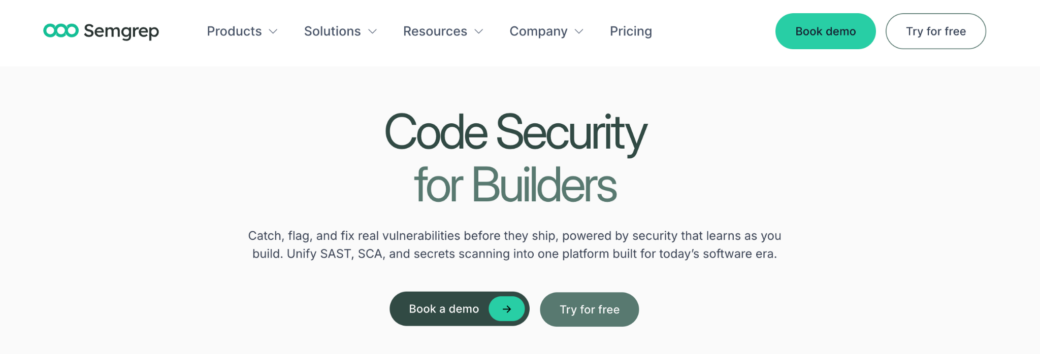
Startups tend to prefer tools that feel flexible rather than prescriptive. Engineering teams often want the freedom to adapt security workflows as products evolve, architectures change, and new requirements emerge.
Semgrep has built a strong reputation in exactly that environment. The platform provides developer-focused security testing while remaining highly customizable. Teams can create their own rules, integrate scans into existing workflows, and avoid much of the complexity commonly associated with traditional enterprise security platforms.
Capabilities include:
- SAST
- Custom security rules
- Secrets detection
- Supply chain security
- CI/CD integration
- Developer-focused workflows
For startups with strong engineering cultures, that flexibility can be particularly appealing.
3. GitHub Advanced Security
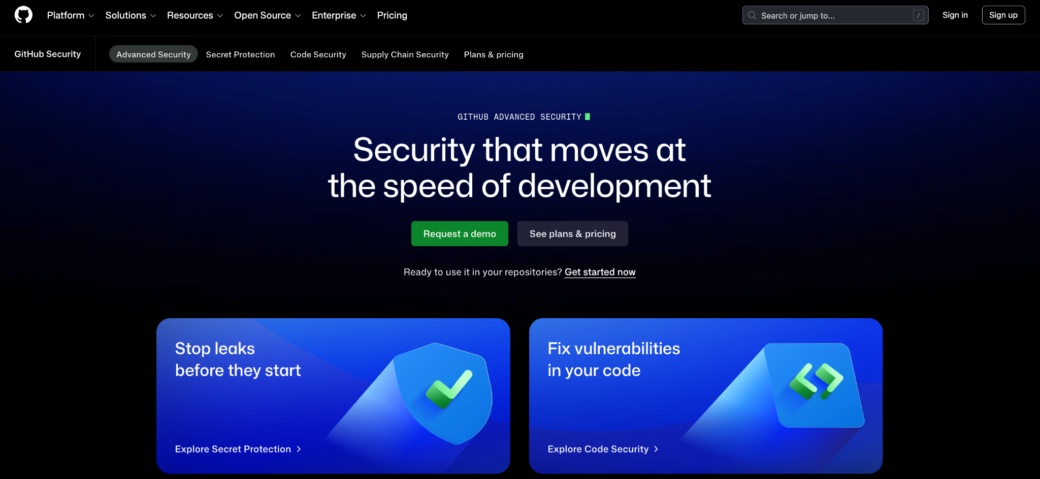
Many startups already run most of their development process inside GitHub. Adding security directly into an environment that developers use every day can be significantly easier than introducing an entirely separate platform.
This is one reason GitHub Advanced Security continues gaining traction among growing technology companies. Security findings appear within repositories, pull requests, and workflows that developers already understand. Adoption often becomes easier because security is integrated into existing habits rather than requiring new ones.
Capabilities include:
- Code scanning
- Secret scanning
- Dependency security
- Pull request integration
- Security campaigns
- Copilot Autofix
For startups heavily invested in GitHub, the platform often feels like a natural extension of the development environment.
4. SonarQube
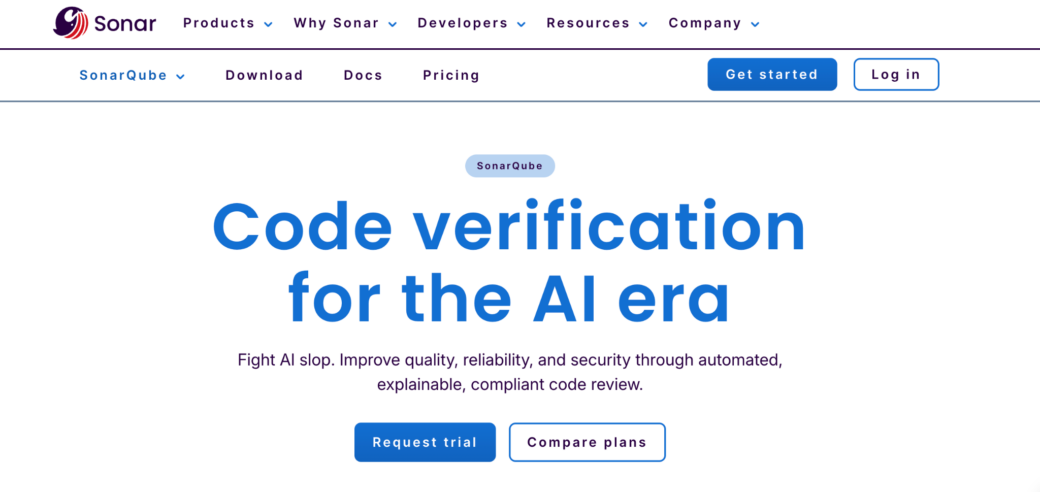
Startups are often trying to solve two problems simultaneously. They need secure software. They also need maintainable software. Technical debt can slow growth almost as effectively as security issues.
SonarQube remains popular because it addresses both concerns at the same time. Many engineering teams adopt it initially for code quality and maintainability, then expand usage as security requirements become more important.
Capabilities include:
- Static analysis
- Security issue detection
- Code quality monitoring
- Technical debt tracking
- CI/CD integration
For smaller teams trying to improve software quality and security simultaneously, SonarQube continues to be a compelling option.
Why Startup Security Decisions Matter More Than They Seem
Early security decisions often last longer than founders expect. The first platform selected frequently becomes part of engineering workflows, compliance processes, customer security reviews, and internal development practices. Replacing that platform later can require retraining teams, rebuilding integrations, and revisiting established processes.
That does not mean startups need perfect security decisions. It does mean they benefit from choosing tools capable of growing alongside the business. A platform that works for ten developers should ideally continue working when there are fifty.
Security Should Not Slow Product Teams Down
Startups win by moving quickly. Security tools that create unnecessary friction rarely survive for long in those environments.
Developers naturally gravitate toward solutions that provide useful feedback without interrupting development. Security teams, meanwhile, want enough visibility to reduce risk and satisfy customer expectations.
The strongest startup security platforms tend to support both goals. They provide coverage where it matters while remaining lightweight enough for fast-moving teams.
Choosing the Right Snyk Competitor
Some startups spend months choosing development frameworks. Others spend weeks selecting cloud infrastructure. Security platforms often receive far less attention. That can be a mistake.
The security decisions made during the early stages of a company tend to survive much longer than founders expect. They shape developer workflows, influence customer conversations, and often determine how difficult security becomes as the organization grows.
Choosing the right platform is not about preparing for today’s challenges. It is about avoiding tomorrow’s.