
5 Best Treasury and Payment Infrastructure for Digital Platforms
Digital platforms now depend on treasury and payment systems inside their internal product flows. Disconnected banking tools or fragmented payment setups create bottlenecks as products scale. Modern platforms manage payouts, reconciliation, onboarding, liquidity visibility, transaction routing, and account coordination inside the product itself. Infrastructure decisions affect financial flexibility, operational speed, and system scalability. This is about backend architecture, not marketing hype.
The providers here support platforms through treasury tooling, banking APIs, payment routing, operational finance systems, or embedded financial coordination. Some focus on transaction processing. Others prioritise banking access, treasury automation, or payment orchestration. Workflow alignment beats brand visibility because platform requirements vary heavily by business model. The selected providers are Finexer, Form3, Griffin, Integrated Finance, and Allica Bank API. Here is a quick snapshot:
- Finexer for Open Banking coordination and connected payment flows;
- Form3 for payment processing and transaction routing systems;
- Griffin for API banking and regulated finance environments;
- Integrated Finance for embedded treasury coordination and modular finance tooling;
- Allica Bank API for business banking connectivity and operational finance access.
The following sections break down where each provider fits best inside treasury and payment environments. The comparison stays focused on finance coordination and workflow relevance rather than broad market positioning.
1. Finexer
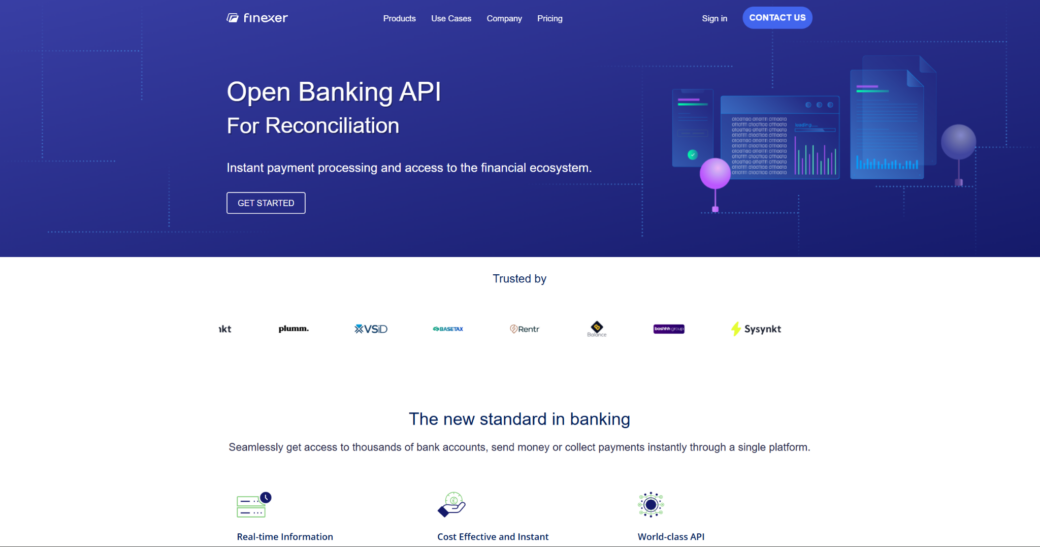
Finexer is a UK-focused Open Banking provider built for treasury coordination and connected payment flows. The company combines Pay by Bank functionality, verification logic, and banking access through one API-driven setup. Finexer supports platforms that need connected finance flows instead of fragmented integrations across multiple vendors. The wording stays practical and systems-focused rather than promotional. Finexer ranks among the strongest fits for UK-focused treasury and payment environments.
The next points focus on areas where Finexer simplifies banking coordination and treasury management for digital platforms. The wording stays tied to API logic and finance operations. Here is what matters:
- Unified API structure for AIS, PIS, and verification workflows;
- UK-focused banking connectivity for digital platforms;
- Real-time financial data for treasury environments;
- Usage-based pricing for scaling products;
- Developer-oriented setup for connected finance coordination.
Finexer becomes especially useful when platforms need banking access, payments, and verification inside one connected environment. Its strongest positioning remains inside UK-focused finance coordination.
Finexer stands out through workflow consolidation instead of oversized enterprise positioning. The provider fits products, trying to reduce fragmentation across banking and payment systems. Grounded and operational.
2. Form3
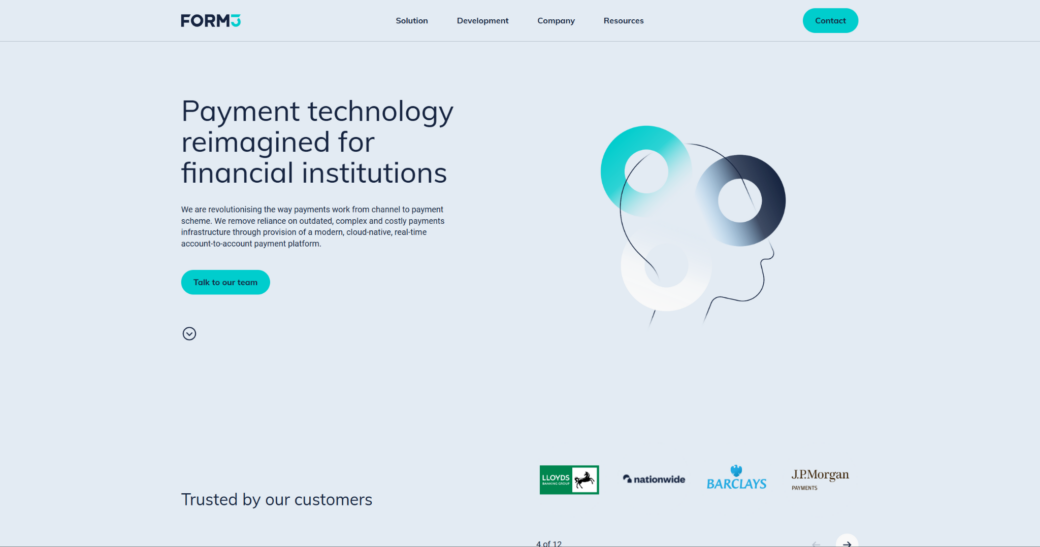
Form3 is a payment processing and transaction routing provider focused on backend payment coordination. The company supports platforms through payment rails, transaction routing systems, and banking connectivity. Form3 focuses heavily on payment processing environments rather than customer-facing finance products. The wording stays infrastructure-oriented and operational. Form3 is a transaction routing layer for scalable digital platforms.
The next section focuses on areas where Form3 supports payment coordination and transaction routing. The wording stays tied to money movement and processing systems. Key capabilities include:
- Payment routing support for scalable digital products;
- Banking connectivity for transaction-heavy systems;
- Processing layers for operational payment environments;
- API-driven transaction coordination for platforms;
- Payment rail support for backend finance systems.
Form3 becomes especially relevant when platforms depend heavily on payment routing and transaction coordination. The provider fits payment-intensive environments particularly well.
Form3 prioritises transaction reliability and backend processing logic over broad embedded finance positioning. The provider feels more infrastructure-heavy than customer-facing. Concise and direct.
3. Griffin
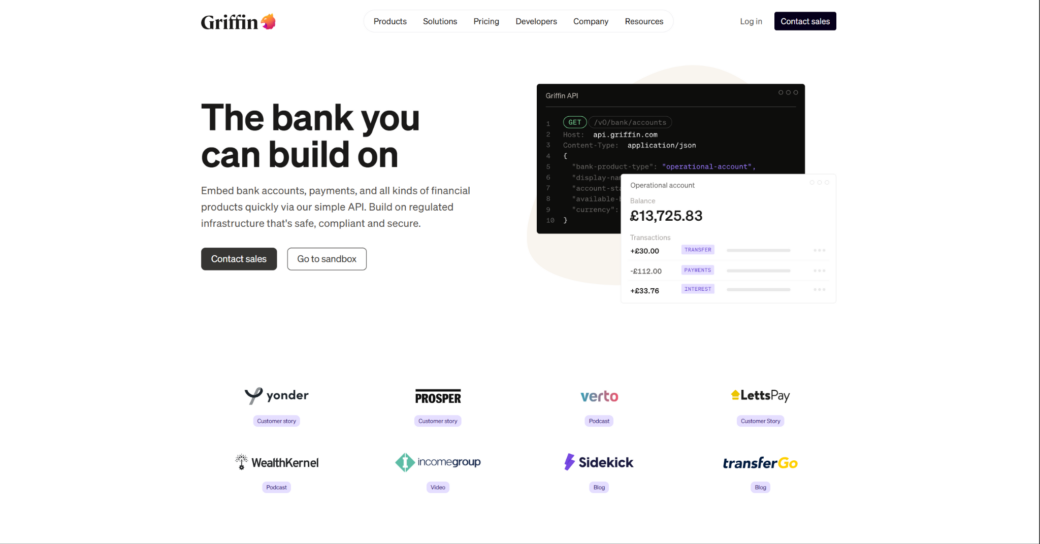
Griffin is an API banking provider connected to regulated finance environments and treasury coordination systems. The company supports platforms through banking access, account infrastructure, and operational finance tooling. Griffin focuses more on API-native banking logic than traditional payment orchestration. The wording stays practical and architecture-oriented. Griffin is a regulated banking layer for modern digital products.
The next points focus on areas where Griffin supports banking coordination and finance management. The wording stays tied to regulated finance systems and treasury workflows. Key features include:
- API banking support for digital platforms;
- Regulated banking access for finance environments;
- Account coordination for treasury systems;
- Banking tooling for scalable software products;
- Embedded finance support for operational workflows.
Griffin becomes especially useful when platforms require regulated banking coordination tied directly to finance operations. The provider fits API-native treasury environments particularly well.
Griffin combines a regulated banking structure with developer-oriented integration logic. The provider feels modern and backend-focused instead of enterprise-heavy. Grounded and analytical.
4. Integrated Finance
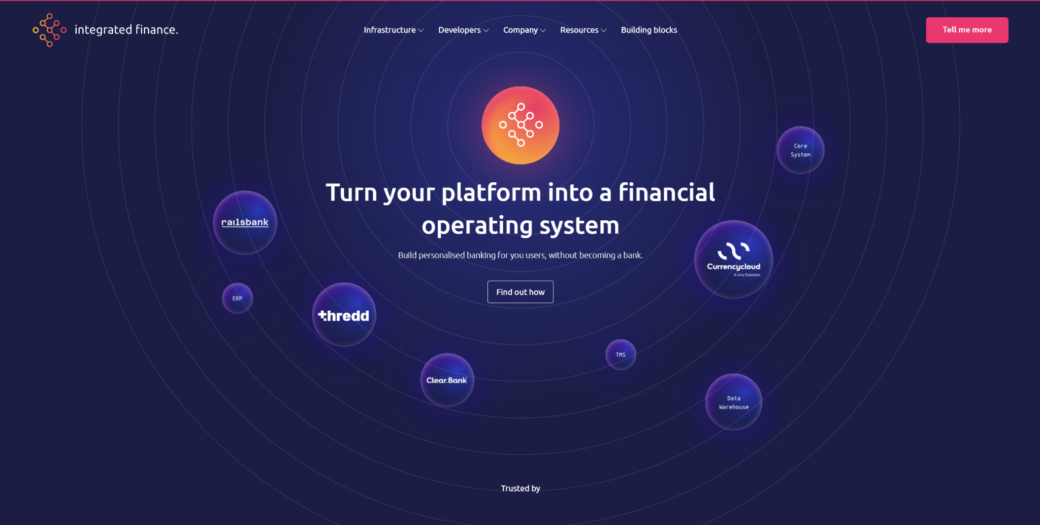
Integrated Finance is an embedded treasury and finance coordination provider focused on modular financial systems. The company supports platforms through treasury tooling, payment coordination, and embedded finance environments. Integrated Finance focuses heavily on modular finance architecture instead of isolated payment functionality. The wording stays workflow-oriented and operational. Integrated Finance is a modular treasury layer for scalable platforms.
The next section focuses on areas where Integrated Finance supports treasury coordination and embedded finance management. The wording stays tied to modular finance systems and backend workflows. Key capabilities include:
- Embedded treasury tooling for digital platforms;
- Finance coordination support for operational systems;
- Modular payment environments for scalable products;
- API-based treasury management for software platforms;
- Connected finance tooling for backend workflows.
Integrated Finance becomes especially relevant when platforms need modular treasury systems tied directly to operational workflows. The provider fits flexible finance environments particularly well.
Integrated Finance stands out through modular finance coordination instead of narrow payment execution. The provider works well for platforms building layered financial systems. Practical and product-oriented.
5. Allica Bank API
Allica Bank API is a business banking connectivity provider focused on operational finance access for digital products. The company supports platforms through banking coordination, account access, and finance tooling connected to business banking workflows. Allica Bank API focuses more on banking relationships and operational access than programmable transaction systems. The wording stays grounded and workflow-focused. Allica Bank API is a business banking layer for finance-heavy platforms.
The next points focus on areas where the Allica Bank API supports business banking coordination and treasury access. The wording stays tied to banking workflows and operational finance systems. Key capabilities include:
- Business banking connectivity for digital products;
- Banking access support for finance-heavy platforms;
- Treasury coordination for operational workflows;
- API-based banking tooling for software systems;
- Finance access support for scalable business environments.
Allica Bank API becomes especially useful when platforms depend heavily on business banking coordination tied to operational finance flows. The provider fits treasury-focused environments particularly well.
Allica Bank API prioritises banking access and finance coordination over broad payment orchestration. The provider fits platforms operating close to business banking environments. Concise and practical.
Matching Treasury Systems to Platform Needs
The best treasury or payment provider depends more on workflow structure than company visibility or product category. Some platforms prioritise payment routing. Others focus more on banking access, treasury automation, or modular finance coordination. Backend finance systems become part of long-term platform architecture rather than a short-term tooling decision. Software teams should compare providers through workflow alignment, scalability, integration logic, and finance coordination requirements. Let us wrap this up.
Final Thoughts
Treasury and payment providers solve different layers inside modern digital platforms. No single provider does everything. Some focus on transaction routing. Others specialise in banking access, treasury coordination, embedded finance systems, or backend payment processing.
Workflow alignment matters more than brand recognition when building scalable finance environments. Finexer is one of the strongest fits for UK-focused platforms needing connected banking and payment workflows through one API-driven setup. Choose based on operational relevance, scalability, and long-term platform architecture. That is the real takeaway.